


Warning: Estimated delivery time min. 10 working days
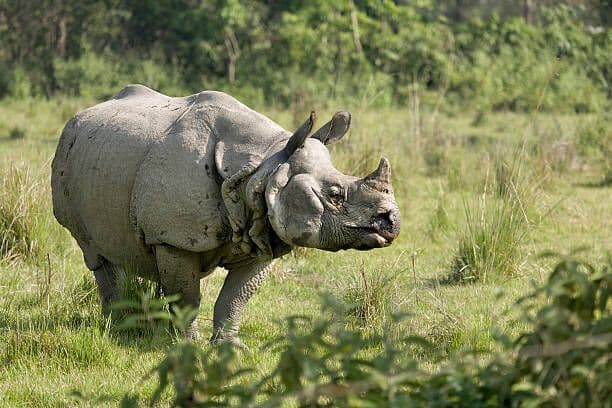
More informationAsian rhinoceros
Rhinoceros unicornis
Natural diet Asian rhinoceros
The Asian rhino is an intermediate grazer and browser, although it mainly consumes grasses. However, dependent on the season, its diet can contain up to 50% of browse.



Feeding advice Asian rhinoceros
Feed quantity per day
1-2.5%
Sample percentage calculation
If an animal weighs 3.000 kg and eats 2% of its body weight, it will get
3.000 x 0,02 = 60 kg feed in total per day
Feed composition
10% Concentrates
60% Grass, alfalfa, roughage
30% Browse
Proportions (fresh product)
0,1 x 60 kg = 6.000 g concentrates
0,6 x 60 kg = 36.000 g grass, alfalfa, roughage
0,3 x 60 kg = 18.000 g browse
Feeding advice Asian rhinoceros
Feed quantity per day
1-2.5%
Sample percentage calculation
If an animal weighs 3.000 kg and eats 2% of its body weight, it will get
3.000 x 0,02 = 60 kg feed in total per day
Feed composition
10% Concentrates
60% Grass, alfalfa, roughage
30% Browse
Proportions (fresh product)
0,1 x 60 kg = 6.000 g concentrates
0,6 x 60 kg = 36.000 g grass, alfalfa, roughage
0,3 x 60 kg = 18.000 g browse
Diet Suggestions
Recommended
Grass hay (e.g. timothy hay)
Lucerne hay
Variety of browse (willow, birch, blackberry)
Salt lick
Not recommended
Vegetables
Fruits
Common diseases
An unbalanced diet may result in one of these more commonly occurring diseases/conditions:
- Colic
- Obesity
- Laminitis
- Foot problems
- Cardiovascular problems
- Farmer’s lung
Additional advice
- Divide the “Feed quantity per day” over at least two feeding moments per day.
- Supplement the diet with ad libitum roughage and/or browse, dependent on the season.
- The ratio between grass hay and lucerne hay should be 50:50 (read more about browsers and grazers).
- The browse used in the diet can be a mixture between dried and fresh browse.
- It is not recommended to feed the rhinos from the ground since they might ingest sand which increases the risk of colic.
- Hang or hide the feed (not in sand) to reduce the risk of colic and increase foraging behaviour (read more about feed enrichment and foraging behaviour).
Diet Suggestions
Recommended
Grass hay (e.g. timothy hay)
Lucerne hay
Variety of browse (willow, birch, blackberry)
Salt lick
Not recommended
Vegetables
Fruits
Common diseases
An unbalanced diet may result in one of these more commonly occurring diseases/conditions:
- Colic
- Obesity
- Laminitis
- Foot problems
- Cardiovascular problems
- Farmer’s lung
