


Buffalo worms bulk51101
Success: Available from stock
More informationNatural diet Giant anteater
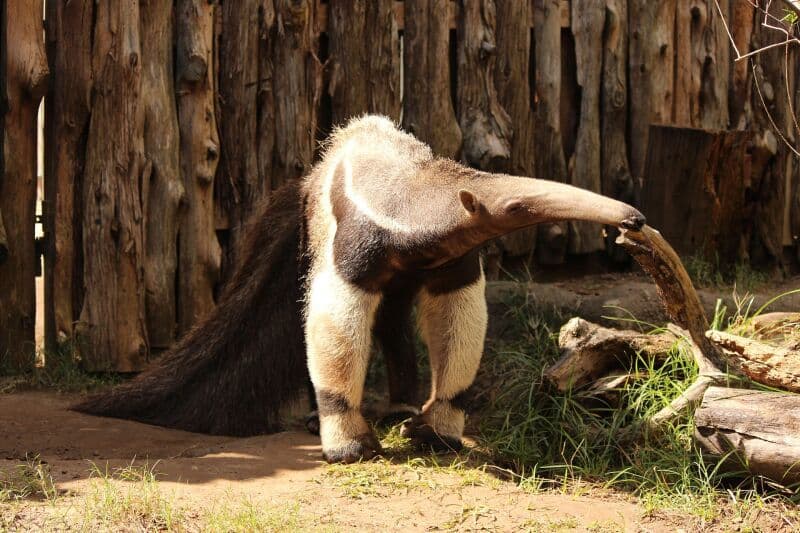
Giant anteaters are insectivores that mainly consume ants and termites. They have short feeding periods at many locations. Besides insects, they can also opportunistically consume soft-bodied grubs, eggs and fruits.
1-3%
If an animal weighs 35 kg and eats 2% of its body weight, it will get
35 x 0,02 = 0,7 kg feed in total per day
20% Insects and other invertebrates
80% Concentrates
0,2 x 0,7 kg = 140 g insects and other invertebrates
0,8 x 0,7 kg = 560 g concentrates
1-3%
If an animal weighs 35 kg and eats 2% of its body weight, it will get
35 x 0,02 = 0,7 kg feed in total per day
20% Insects and other invertebrates
80% Concentrates
0,2 x 0,7 kg = 140 g insects and other invertebrates
0,8 x 0,7 kg = 560 g concentrates
Variety of small insects
Live insects
Peat (only sifted)
Fruits
Vegetables
An unbalanced diet may result in one of these more commonly occurring diseases/conditions:
Variety of small insects
Live insects
Peat (only sifted)
Fruits
Vegetables
An unbalanced diet may result in one of these more commonly occurring diseases/conditions:
