


Warning: Expected delivery min. 5 days
More informationIntermediate marmosets and tamarins
Callitrichidae spp.
Natural diet Intermediate marmosets and tamarins
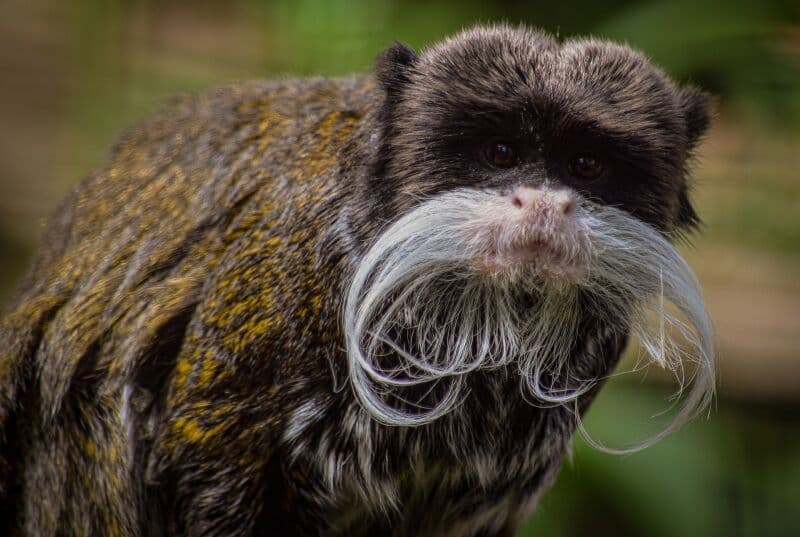
Intermediate marmosets and tamarins are a collection of omnivorous primates whose diet lies in-between that of gummivorous and frugivorous primates. Their diet is diverse and may include fruits, nectar, insects and small vertebrates. In terms of gum, they are also intermediaries, consuming more than frugivores but less than gummivores.



Feeding advice Intermediate marmosets and tamarins
Feed quantity per day
20-30%
Sample percentage calculation
If an animal weighs 0,4 kg and eats 25% of its body weight, it will get
0,4 x 0,25 = 0,1 kg feed in total per day
Feed composition
45% Insects and other invertebrates
10% Concentrates
35% Other vegetables
10% Other
Proportions (fresh product)
0,45 x 0,1 kg = 45 g insects and other invertebrates
0,1 x 0,1 kg = 10 g concentrates
0,35 x 0,1 kg = 35 g other vegetables
0,1 x 0,1 kg = 10 g other
Feeding advice Intermediate marmosets and tamarins
Feed quantity per day
20-30%
Sample percentage calculation
If an animal weighs 0,4 kg and eats 25% of its body weight, it will get
0,4 x 0,25 = 0,1 kg feed in total per day
Feed composition
45% Insects and other invertebrates
10% Concentrates
35% Other vegetables
10% Other
Proportions (fresh product)
0,45 x 0,1 kg = 45 g insects and other invertebrates
0,1 x 0,1 kg = 10 g concentrates
0,35 x 0,1 kg = 35 g other vegetables
0,1 x 0,1 kg = 10 g other
Diet Suggestions
Recommended
Insects
Variety of vegetables
In moderation
Gum
Tamarin cake
Not recommended
Fruits
Common diseases
An unbalanced diet may result in one of these more commonly occurring diseases/conditions:
- Obesity
- Marmoset Wasting Syndrome
- Periodontal disease
- Gastrointestinal problems
Additional advice
- Divide the “Feed quantity per day” over at least three feeding moments per day.
- Although present in their natural diet, feeding fruits might lead to abnormal fermentation in the hindgut because of high sugar levels in cultivated fruits compared to wild fruits (read more about nutritional values of (wild) fruits and vegetables).
- Supplement the diet with sufficient vitamin D and folic acid. When feeding appropriate concentrates, this is not necessary.
- Supplement a diverse selection of vegetables (read more about differences between vegetables).
- Provide less palatable food in the morning, when hunger is greatest.
- Feeding in bowls is not recommended.
- Stimulate foraging behaviour by hiding, stacking or hanging the feed. Examples can be feeding puzzles, tubes, hanging boxes and/ or scatter feeding (read more about feed enrichment and foraging behaviour).
Diet Suggestions
Recommended
Insects
Variety of vegetables
In moderation
Gum
Tamarin cake
Not recommended
Fruits
Common diseases
An unbalanced diet may result in one of these more commonly occurring diseases/conditions:
- Obesity
- Marmoset Wasting Syndrome
- Periodontal disease
- Gastrointestinal problems
Species within this group
Snethlage's marmoset
Black-chinned emperor tamarin
Bearded emperor tamarin
Black-tailed marmoset
Aripuanã marmoset
Pied tamarin
Saddle-back tamarin
Red-bellied tamarin
Moustached tamarin spp.
Cotton-top tamarin
Wied’s black tufted-ear marmoset
Goeldi’s monkey


