


Warning: Expected delivery min. 5 days
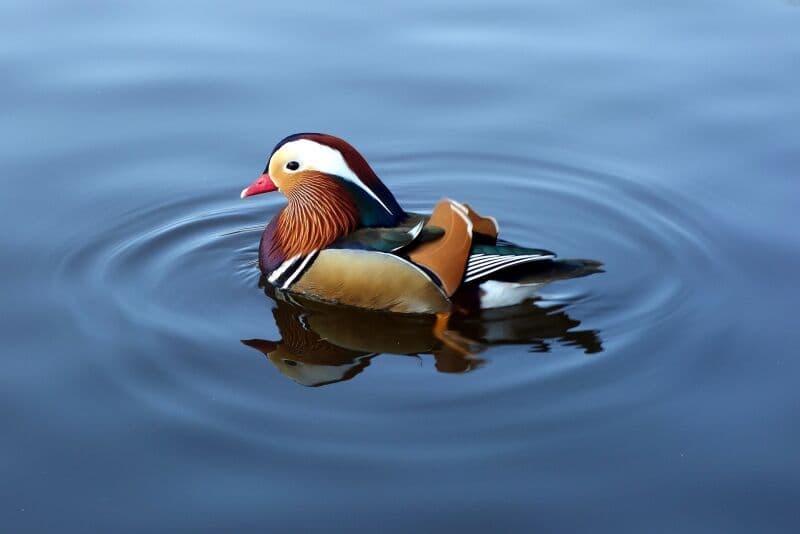
More informationMandarin duck
Aix galericulata
Natural diet Mandarin duck
Mandarin ducks have an omnivorous diet as it primarily consists of watery plants, snails, seeds, insects and occasionally small fish. Their diet is dependent on the seasonal availability. They may forage while swimming, at the water’s edge or at debris on banks.

Feeding advice Mandarin duck
Feed quantity per day
6-10%
Sample percentage calculation
If an animal weighs 0,6 kg and eats 8% of its body weight, it will get
0,6 x 0,08 = 0,05 kg feed in total per day
Feed composition
3% Insects and other invertebrates
60% Concentrates
27% Other vegetables
10% Other
Proportions (fresh product)
0,03 x 0,05 kg = 1 g insects and other invertebrates
0,6 x 0,05 kg = 29 g concentrates
0,27 x 0,05 kg = 13 g other vegetables
0,1 x 0,05 kg = 5 g other
Feeding advice Mandarin duck
Feed quantity per day
6-10%
Sample percentage calculation
If an animal weighs 0,6 kg and eats 8% of its body weight, it will get
0,6 x 0,08 = 0,05 kg feed in total per day
Feed composition
3% Insects and other invertebrates
60% Concentrates
27% Other vegetables
10% Other
Proportions (fresh product)
0,03 x 0,05 kg = 1 g insects and other invertebrates
0,6 x 0,05 kg = 29 g concentrates
0,27 x 0,05 kg = 13 g other vegetables
0,1 x 0,05 kg = 5 g other
Diet Suggestions
Recommended
Variety of leafy vegetables
Variety of insects
Grain mix
Soluble grit
Not recommended
Common diseases
An unbalanced diet may result in one of these more commonly occurring diseases/conditions:
- Angel Wing
- Metabolic Bone Disease
- Perosis
- Bowed legs
- Crop impaction
Additional advice
- Divide the “Feed quantity per day” over at least two feeding moments per day.
- Supplement the diet with around 10% grain mixture.
- Supplement the diet with ad libitum soluble grit as a source of calcium.
- Insoluble grit is not required if they go outside, as they will ingest small stones (read more about grit).
- Avoid feeding bread as the high starch content may cause gastro-intestinal disturbances.
- Stimulate foraging behaviour by using feeding puzzles and scatter feeding (read more about feed enrichment and foraging behaviour).
Diet Suggestions
Recommended
Variety of leafy vegetables
Variety of insects
Grain mix
Soluble grit
Not recommended
Common diseases
An unbalanced diet may result in one of these more commonly occurring diseases/conditions:
- Angel Wing
- Metabolic Bone Disease
- Perosis
- Bowed legs
- Crop impaction


