


DK Meat SupplementDK021
Success: Available from stock
More informationNatural diet Polar Bear
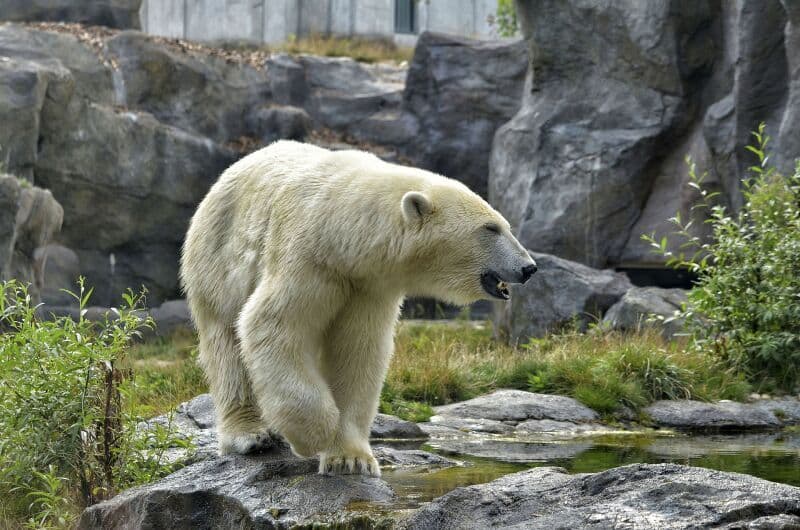
Polar bear are strictly carnivorous predators. They primarily feed on seals, but occasionally larger prey such as walruses and narwhals are consumed too. Food intake increases during spring/summer months to accumulate enough fat because of hibernation during the winter period.

0.2-0.4%
If an animal weighs 450 kg and eats 0,3% of its body weight, it will get
450 x 0 = 1,35 kg feed in total per day
69% Meat and whole prey
30% Fish products
1% Supplements
0,69 x 1,35 kg = 932 g meat and whole prey
0,3 x 1,35 kg = 405 g fish products
0,01 x 1,35 kg = 14 g supplements
0.2-0.4%
If an animal weighs 450 kg and eats 0,3% of its body weight, it will get
450 x 0 = 1,35 kg feed in total per day
69% Meat and whole prey
30% Fish products
1% Supplements
0,69 x 1,35 kg = 932 g meat and whole prey
0,3 x 1,35 kg = 405 g fish products
0,01 x 1,35 kg = 14 g supplements
Variety of prey
Whole prey
Variety of fish
Supplements
An unbalanced diet may result in one of these more commonly occurring diseases/conditions:
Variety of prey
Whole prey
Variety of fish
Supplements
An unbalanced diet may result in one of these more commonly occurring diseases/conditions:

