


Warning: Verwachte levertijd min. 5 werkdagen
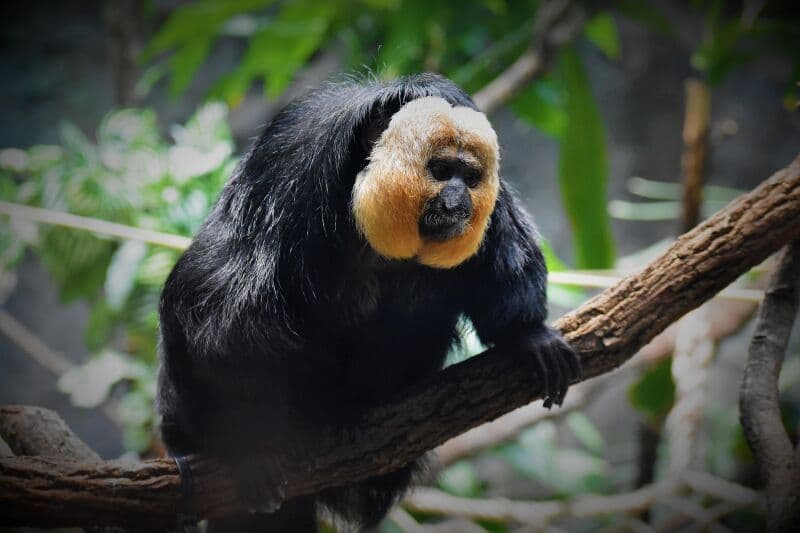
Meer informatieWhite-faced saki
Pithecia pithecia
Natuurlijk dieet White-faced saki
White-faced sakis are herbivorous primates that naturally live in tropical rainforests in northern South-America. Their diet consist largely out of fruits, seeds and leaves. Besides this, occasionally insects and flowers are consumed too.


Voedingsadvies White-faced saki
Voerhoeveelheid per dag
10-15%
Voorbeeld van procentberekening
Als een dier 2 kg weegt en 10% van zijn lichaamsgewicht eet, krijgt het
2 x 0,1 = 0,2 kg voer in totaal per dag
Voedersamenstelling
2% Insecten en andere ongewervelden
10% Concentraten
40% Bladgroenten en kolen
30% Andere groenten
10% Blad- en takvoer
8% Overig
Verhoudingen (vers product)
0,02 x 0,2 kg = 4 g insecten en andere ongewervelden
0,1 x 0,2 kg = 20 g concentraten
0,4 x 0,2 kg = 80 g bladgroenten en kolen
0,3 x 0,2 kg = 60 g andere groenten
0,1 x 0,2 kg = 20 g blad- en takvoer
0,08 x 0,2 kg = 16 g overig
Voedingsadvies White-faced saki
Voerhoeveelheid per dag
10-15%
Voorbeeld van procentberekening
Als een dier 2 kg weegt en 10% van zijn lichaamsgewicht eet, krijgt het
2 x 0,1 = 0,2 kg voer in totaal per dag
Voedersamenstelling
2% Insecten en andere ongewervelden
10% Concentraten
40% Bladgroenten en kolen
30% Andere groenten
10% Blad- en takvoer
8% Overig
Verhoudingen (vers product)
0,02 x 0,2 kg = 4 g insecten en andere ongewervelden
0,1 x 0,2 kg = 20 g concentraten
0,4 x 0,2 kg = 80 g bladgroenten en kolen
0,3 x 0,2 kg = 60 g andere groenten
0,1 x 0,2 kg = 20 g blad- en takvoer
0,08 x 0,2 kg = 16 g overig
Dieetadviezen
Aanbevolen
Variety of browse (willow, aspen, birch, rowan)
Seeds and nuts (with shell)
Leafy and green vegetables
In moderation
Insects
Sunflower seeds and peanuts
Niet aanbevolen
Fruits
Veelvoorkomende ziekten
An unbalanced diet may result in one of these more commonly occurring diseases/conditions:
- Periodontal disease
- Reproductive failure
- Cardiovascular disease
- Diabetes mellitus
- Gastrointestinal problems
Aanvullend advies
- Divide the “Feed quantity per day” over at least three feeding moments per day.
- Although present in their natural diet, feeding fruits might lead to abnormal fermentation in the hindgut because of high sugar levels in cultivated fruits compared to wild fruits (read more about nutritional values of (wild) fruits and vegetables).
- Supplement the diet with sufficient vitamin D and folic acid. When feeding appropriate concentrates, this is not necessary.
- Supplement a diverse selection of vegetables (read more about differences between vegetables).
- Provide less palatable food in the morning, when hunger is greatest.
- Feeding in bowls is not recommended.
- Stimulate foraging behaviour by hiding, stacking or hanging the feed. Examples can be feeding puzzles, tubes, hanging boxes and/ or scatter feeding (read more about feed enrichment and foraging behaviour).
Dieetadviezen
Aanbevolen
Variety of browse (willow, aspen, birch, rowan)
Seeds and nuts (with shell)
Leafy and green vegetables
In moderation
Insects
Sunflower seeds and peanuts
Niet aanbevolen
Fruits
Veelvoorkomende ziekten
An unbalanced diet may result in one of these more commonly occurring diseases/conditions:
- Periodontal disease
- Reproductive failure
- Cardiovascular disease
- Diabetes mellitus
- Gastrointestinal problems


