


Success: Available from stock
More informationCarnivorous fish
Spp.
Natural diet Carnivorous fish
Carnivorous fish is a group of species that primarily consume other aquatic organisms such as fish, crustaceans and algae. Occasionally some species may also consume insects, seeds, carrion and invertebrates like worms.
Feeding advice Carnivorous fish
Feed quantity per day
1-15%
Sample percentage calculation
If an animal weighs 0.05 kg and eats 5% of its body weight, it will get
0.05 x 0.05 = 0 kg feed in total per day
Feed composition
50% Fish products
50% Concentrates
Proportions (fresh product)
0.5 x 0 kg = 1 g fish products
0.5 x 0 kg = 1 g concentrates
Feeding advice Carnivorous fish
Feed quantity per day
1-15%
Sample percentage calculation
If an animal weighs 0.05 kg and eats 5% of its body weight, it will get
0.05 x 0.05 = 0 kg feed in total per day
Feed composition
50% Fish products
50% Concentrates
Proportions (fresh product)
0.5 x 0 kg = 1 g fish products
0.5 x 0 kg = 1 g concentrates
Diet Suggestions
Recommended
Concentrates / gel
Live feed
Frozen feed
Small fish
Not recommended
Live prey (except for microorganisms)
Common diseases
An unbalanced diet may result in one of these more commonly occurring diseases/conditions:
- Poor water quality (can lead to ammonia poisoning)
- Gill impairment
- Columnaris
Additional advice
- Divide the “Feed quantity per day” over at least two feeding moments per day.
- The food should be consumed within 15-30 minutes.
- Depending on the fish species, supplement the diet with aquatic gel, live feed, frozen feed or small fish.
- Use floating or sinking concentrates, depending on the preference of the fish species.
- Make sure that the water quality parameters are maintained within pre-set ranges, as this is essential for proper welfare and health.
Diet Suggestions
Recommended
Concentrates / gel
Live feed
Frozen feed
Small fish
Not recommended
Live prey (except for microorganisms)
Common diseases
An unbalanced diet may result in one of these more commonly occurring diseases/conditions:
- Poor water quality (can lead to ammonia poisoning)
- Gill impairment
- Columnaris
Species within this group
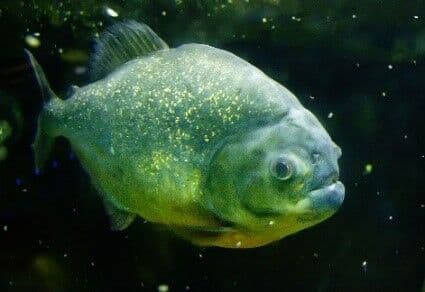
- Piranha
- Spindle Hap Cichlid
- Arowana
- Leopard catfish
- Bettas
- Discus
