


Success: Available from stock
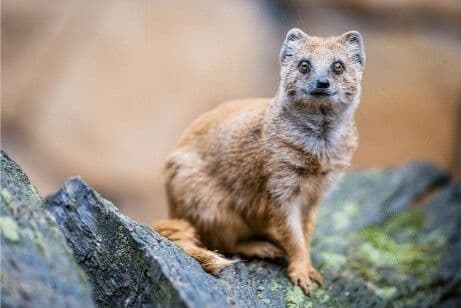
More informationYellow mongoose
Cynictis penicillata
Natural diet Yellow mongoose
The yellow mongoose is an omnivorous species that is very opportunistic when selecting its diet. Its diet primarily consists of insects like ants, termites and grasshoppers. Next to this, it opportunistically feeds on small vertebrates (such as rodents, reptiles and birds) and may also consume carrion, fruits, nuts and seeds.
Feeding advice Yellow mongoose
Feed quantity per day
10%
Sample percentage calculation
Feed composition
60% Meat and whole prey
25% Insects and other invertebrates
15% Concentrates
Proportions (fresh product)
0.6 x 0 kg = 0 g meat and whole prey
0.25 x 0 kg = 0 g insects and other invertebrates
0.15 x 0 kg = 0 g concentrates
Feeding advice Yellow mongoose
Feed quantity per day
10%
Sample percentage calculation
Feed composition
60% Meat and whole prey
25% Insects and other invertebrates
15% Concentrates
Proportions (fresh product)
0.6 x 0 kg = 0 g meat and whole prey
0.25 x 0 kg = 0 g insects and other invertebrates
0.15 x 0 kg = 0 g concentrates
Diet Suggestions
Recommended
Variety of insects
Whole prey
Pellets
In moderation
Eggs
Not recommended
Fruits
Common diseases
An unbalanced diet may result in one of these more commonly occurring diseases/conditions:
- Taurine deficiency
- Obesity
- Secondary alimentary hyperparathyroidism
- Oral malfunctioning
Additional advice
- Divide the “Feed quantity per day” over at least two feeding moments per day.
- Eggs can be supplemented as enrichment of the diet.
- Supplements should be provided if the diet does not contain pellets.
- Feeding gut-loaded (or dusted) insects will help maintaining a proper vitamin and mineral balance.
- Feeding fruits might lead to might lead to gastro-intestinal disturbances because of the high sugar level and low fiber level in cultivated fruits compared to wild fruits (read more about nutritional values of (wild) fruits and vegetables).
- Stimulate foraging behavior by hiding, stacking or hanging the feed (read more about feed enrichment and foraging behaviour).
Diet Suggestions
Recommended
Variety of insects
Whole prey
Pellets
In moderation
Eggs
Not recommended
Fruits
Common diseases
An unbalanced diet may result in one of these more commonly occurring diseases/conditions:
- Taurine deficiency
- Obesity
- Secondary alimentary hyperparathyroidism
- Oral malfunctioning


